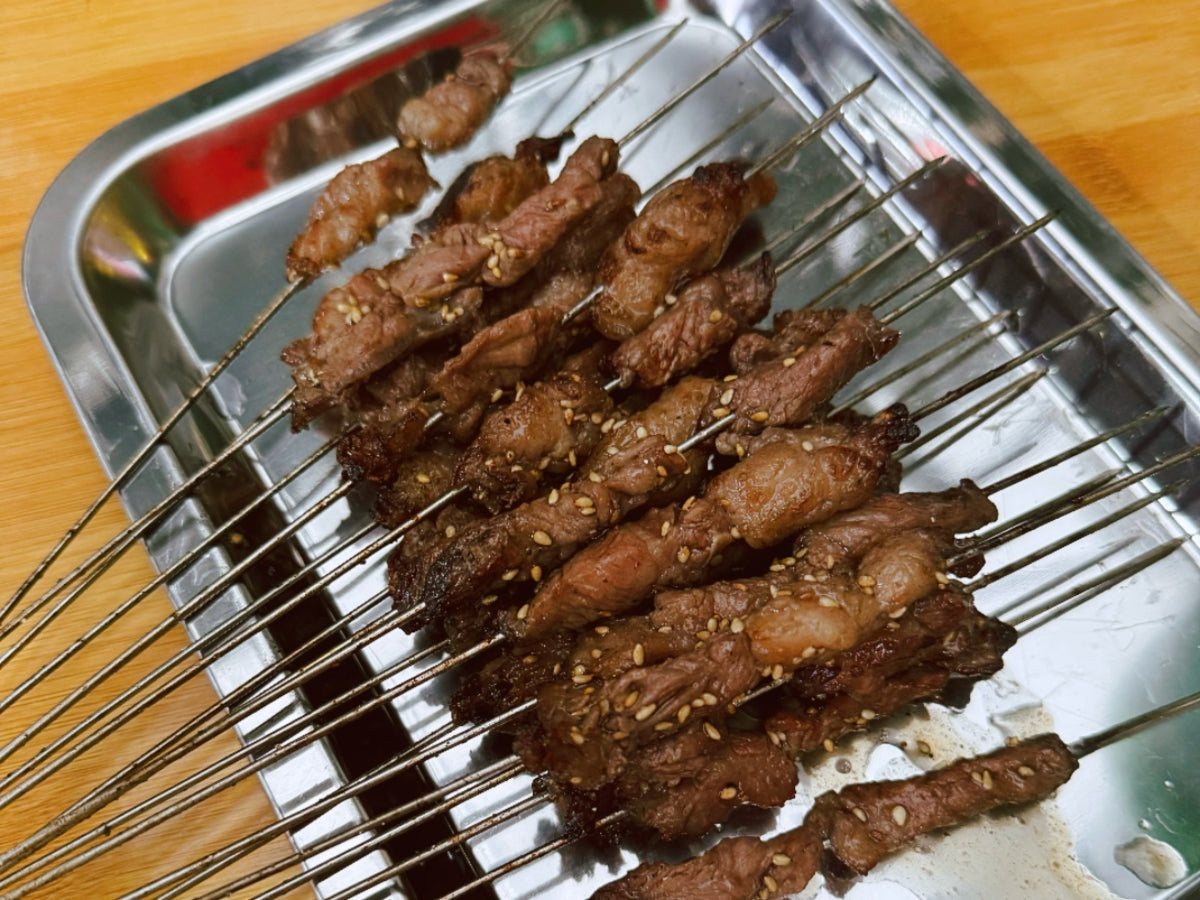
Hui Muslim Specialties
Why it’s legendary
-
Silk Road Flavors, Alive in Every Bite
Xi’an’s Muslim Quarter dishes are a spice-fueled time capsule of its Silk Road legacy:
- Central Asian heat (cumin, chili) meets Chinese techniques (braised lamb, hand-pulled noodles) and Halal rigor—no pork, just bold broths and charred kebabs.
- Watch bakers slap dough into clay ovens and century-old shops like Lao Sun Jia craft recipes unchanged since camels trod these streets.
History of the Muslim Quarter in Xi'an
1. Silk Road Origins
Xi’an (then called Chang’an) was the eastern terminus of the ancient Silk Road, a bustling crossroads where merchants, scholars, and travelers from Persia, Central Asia, and the Arab world converged. Many of these traders were Muslims who settled in Xi’an, bringing Islam to China during the Tang Dynasty (618–907 CE). Over centuries, their descendants—ethnic Hui people (Chinese Muslims)—formed a permanent community in the city’s heart.
2. Hui Muslim Community
Cultural Preservation: The Hui, while adopting Chinese language and customs, maintained Islamic traditions, dietary laws (halal), and religious practices. The quarter became their spiritual and social nucleus.Architectural Fusion: Landmarks like the Great Mosque of Xi’an (built in 742 CE) blend Chinese pagoda-style roofs with Arabic calligraphy and Islamic courtyards, symbolizing this cultural harmony.
3. Dynastic Support & Continuity
Yuan Dynasty (1271–1368): Mongol rulers encouraged Muslim migration, boosting the community’s size and influence.Ming/Qing Dynasties (1368–1912): Hui people thrived as merchants and artisans, solidifying the quarter’s role as a commercial and religious center.
4. Modern Identity
Today, the Muslim Quarter is:A living heritage zone where Hui families run centuries-old food stalls, tea shops, and craft businesses.A culinary mecca showcasing halal-Chinese fusion cuisine (e.g., spiced lamb, hand-pulled noodles).A symbol of cultural coexistence, where Islamic traditions and Han Chinese customs intertwine seamlessly.
Highlights in the Muslim Quarter
羊肉泡馍 Yang Rou Pao Mo
Crumbled Flatbread in Lamb Stew
- Signature dish: Hand-torn flatbread soaked in rich, aromatic lamb broth, served with tender meat and herbs.
- Cultural ritual: Diners tear the bread themselves as part of the experience.
腊牛肉夹馍 la niu rou jia mo
Chinese Hamburger (Halal Version)
- Halal version: Slow-cooked beef or lamb stuffed in a crispy, flaky flatbread.
- Best with:Hearty soups like spicy pepper soup, meatball soup, or mixed offal soup.
酸菜炒米 suan cai chao mi
Pickled Cabbage Fried Rice
- Tangy + Savory Fusion: Sour pickled cabbage cut through the richness of stir-fried rice, often tossed with tender beef, and fried eggs.
- Texture Play: Chewy rice grains, crispy vegetable bits, and a smoky wok aroma create addictive contrasts.
- Halal Twist: No pork—beef adds depth, while cumin and chili nod to Silk Road spices.
牛肉馄饨 Niu rou Hun tun
Beef Wonton
- Rich Broth: Served in a deeply flavorful beef bone broth simmered with traditional spices like white pepper, offering a warm, aromatic, and slightly numbing taste.
- Handcrafted Wontons: Each piece features thin, delicate wrappers stuffed with juicy beef filling, praised for their tender texture and authentic handmade quality.
Craving more culinary adventures?
Join our 3-hour food tour to dive deeper into Xi’an’s flavors—uncover hidden gems such as century-old recipes!
Shaanscape
All Inclusive Food & History Tour of Muslim Quarter
Share